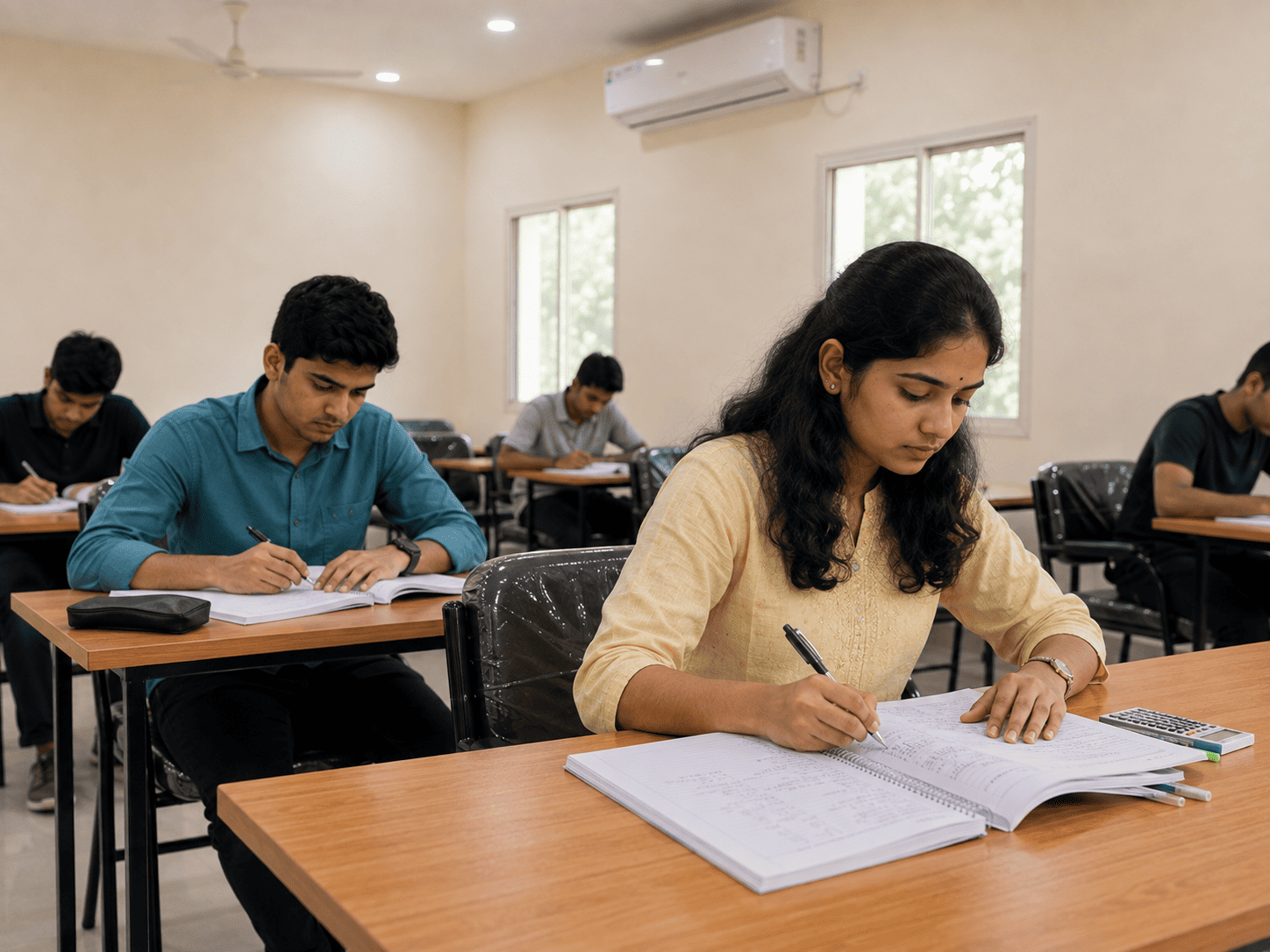
In my opinion, schools should reconsider the growing practice of integrating intensive coaching for competitive entrance examinations into the regular school curriculum.
I believe the primary responsibility of a school is to provide a strong and well-rounded educational foundation. Schools should focus on quality teaching in Languages, Mathematics, Science, Humanities and Commerce, while also developing essential life skills such as discipline, good manners, communication, confidence, responsibility, empathy and respectful behaviour. These qualities form the foundation for a child’s personality and future success, far beyond any single competitive examination.
There are already numerous specialized institutions and coaching centres that focus exclusively on competitive entrance examinations such as CLAT, IPMAT, JEE, NEET, CUET, SAT and others. These examinations have their own patterns, strategies, aptitude requirements and constantly evolving methodologies. Preparing students effectively for them requires specialized faculty, dedicated resources, regular testing and an approach specifically designed around the examination. This is not necessarily the primary specialization or responsibility of school teachers.
When competitive-exam coaching is integrated into the school curriculum, students are often required to spend an already long school day attending additional classes and preparing for multiple subjects. This can leave very little time for breaks, recreation, independent learning, hobbies, physical activity or simply being children. The additional academic load can create unnecessary pressure, particularly when students are simultaneously expected to perform well in their regular school curriculum.
I also believe that parents and students should have the freedom to choose a specialized coaching institution based on the student’s individual aspirations, learning style and requirements. Making competitive coaching an integral and compulsory part of schooling can take away that choice.
Schools can certainly play an important role in career awareness, counselling and foundational aptitude development. They can expose students to different career pathways and help them understand various competitive examinations. However, intensive and examination-specific preparation is, in my view, better left to specialized institutions that have the expertise and infrastructure to do it well.
Ultimately, I believe there should be a clear distinction between education and examination coaching. Schools should concentrate on building the foundation—academic knowledge, character, discipline, values and life skills—while specialized institutions can provide the competitive edge required for specific entrance examinations.
Schools should build the foundation; specialized institutions should build the competitive edge.
Arthi Karan
Director - StratEdge Academy